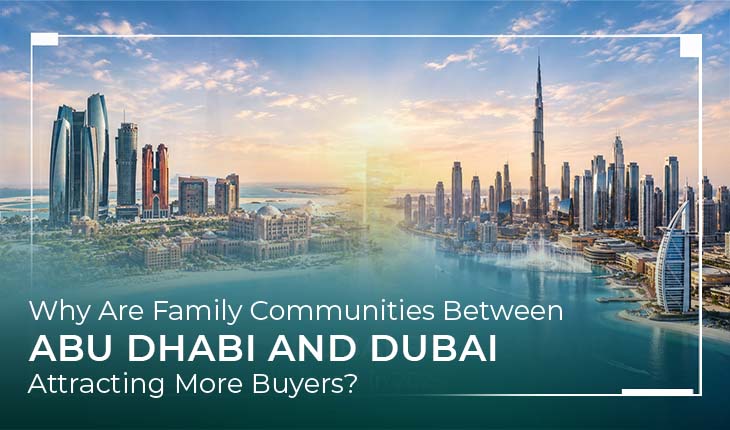
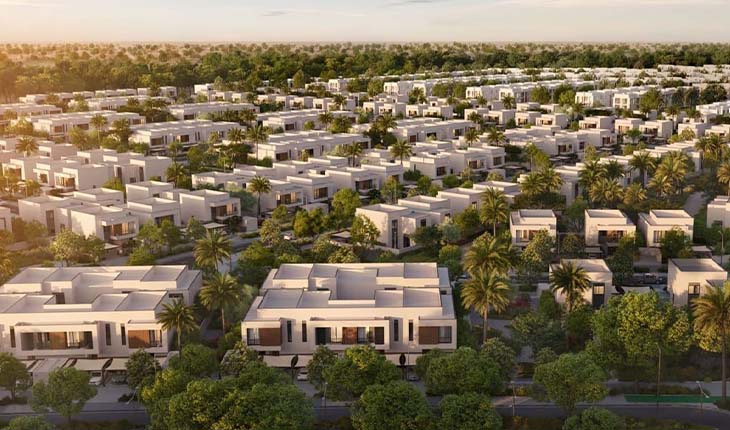
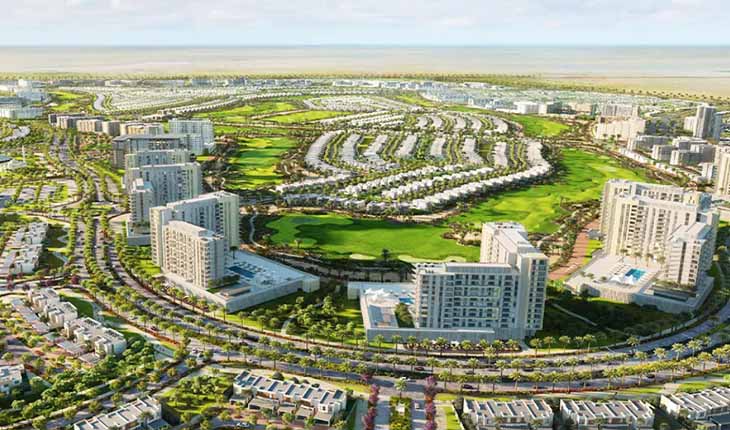
Something has shifted in how families in the UAE are choosing where to live. Instead of committing fully to Abu Dhabi or Dubai, more buyers are looking at the growth corridor between the two, and developers are responding with master-planned, family-oriented communities built around schools, open space, and easy access to both cities. One recent example, Aldar’s Al Ghadeer Gardens, sold out 437 villas and townhouses at launch, generating more than AED 1 billion in sales. It’s a useful snapshot of the trend, but it’s far from the whole story.
The bigger picture is a market-wide shift, and the data supports it.
One Location, Two Job Markets
The appeal of this corridor starts with geography. Communities positioned between the two emirates typically sit within roughly 20 minutes of major hubs on both sides; think Expo City Dubai, Al Maktoum International Airport, Yas Island and Zayed International Airport. That means a family no longer has to choose which emirate to build a career around. Someone can work in Dubai and still come home to an Abu Dhabi community, or the other way round, without the daily trade-off that usually comes with that kind of flexibility.
More Than a House: What Family Buyers Actually Want
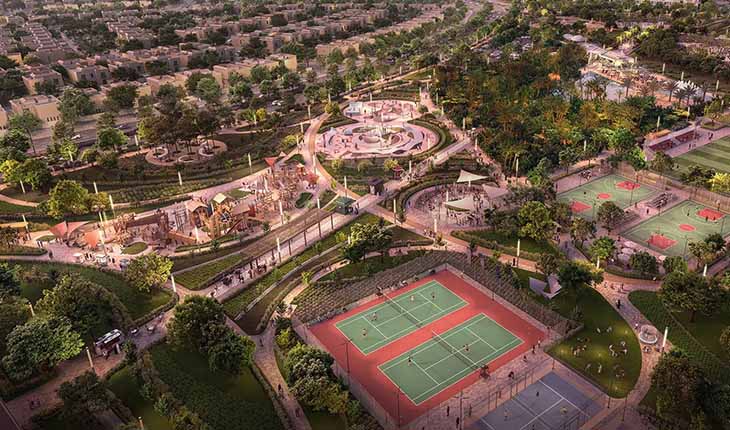
Most family buyers aren’t pricing a villa in isolation. They’re pricing everything around it; the school run, the weekend routine, the walk to the park. That’s why developments built with public gardens, community pools, cycling tracks, sports courts and retail baked in tend to perform better than standalone housing. Aldar’s own H1 2026 results pointed to this directly, noting that recent launches across Yas Park Place, Al Ghadeer Gardens and The Orchids at Yas Acres reflected a deliberate strategy toward family-oriented, mid-priced homes, with AED 7.6 billion in H1 2026 sales going to overseas and expatriate buyers, representing 80% of UAE sales.
Schools Are Entering the Real Estate Equation
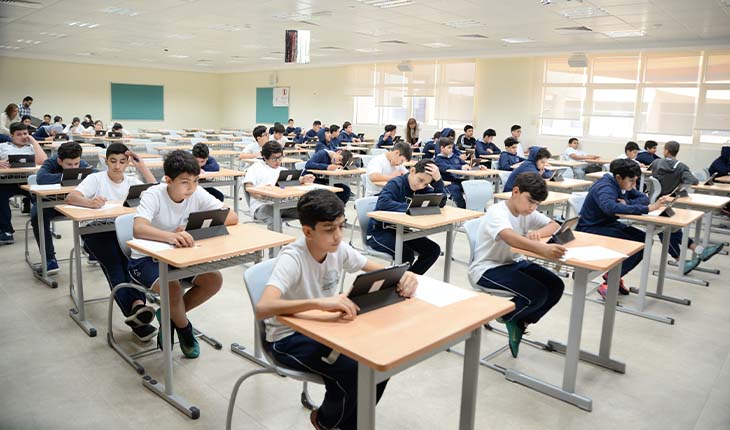
Education has quietly become one of the biggest factors in this shift. New communities in the corridor are increasingly built with schools inside the masterplan rather than nearby, cutting the daily commute and giving parents one less thing to plan around. For families, “where will my kids go to school” is often just as important as the price per square foot.
Abu Dhabi’s Residential Market Is Already Running Hot
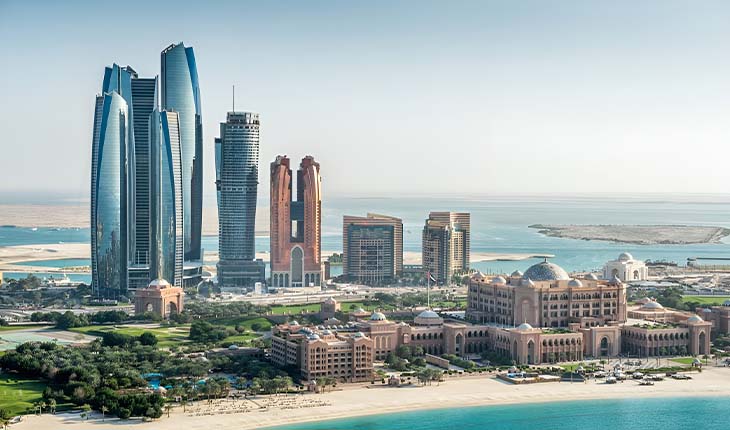
Zoom out to the wider market, and the momentum becomes clearer. At Gravity Real Estate, this is the kind of shift we’ve been tracking closely across Abu Dhabi’s residential sector. ADREC’s H1 2026 report puts Abu Dhabi residential sales at AED 70.4 billion, up from AED 25.3 billion the year before, close to 178% growth. Off-plan transactions made up 89% of that value, and resident expatriates together with overseas buyers accounted for 70% of residential sales. Villa prices climbed 12% year-on-year, while new villa rents rose 9%, and the emirate’s residential stock is expected to grow by roughly 71,000 units by 2030. None of that data names “family communities” specifically as the cause, but it shows a market where well-positioned residential projects are landing in front of buyers who are ready to commit.
Dubai South Is Building the Other Half of the Corridor
This isn’t just an Abu Dhabi story. Dubai South’s Residential District already houses more than 30,000 people, with parks, retail, a hypermarket, a school, and transport links to Expo Metro, and the developer reported over AED 19 billion in residential sales in 2024. Projects like South Bay and The Pulse Beachfront have reportedly sold out at launch, and in May 2026, Dubai South and Majid Al Futtaim announced an AED 62 billion, 22-million-sq-ft master community for the area. Add in the Dubai government’s long-term plan for Al Maktoum International Airport (An AED 128 billion project targeting 260 million passengers annually), and it’s clear the entire corridor, not just one project, is being built around future population growth.
What This Means If You’re Buying
- End users: weigh schools, commute times, and on-site amenities as heavily as the sale price.
- Families: look for communities with established infrastructure already running, not just renders.
- Investors: rental demand is holding up; Abu Dhabi recorded 233,000 active lease contracts worth AED 9.3 billion in H1 2026 alone.
- Long-term buyers: track the infrastructure pipeline, including airport and transport projects, rather than buying purely on launch-day hype.
So, Will Family Communities Between Abu Dhabi and Dubai Keep Growing?
No single project proves an entire market shift, and it would be a stretch to say families are abandoning Abu Dhabi or Dubai for the corridor between them. But strong Abu Dhabi residential sales, a deliberate developer push toward family-oriented housing (Al Ghadeer Gardens among them) and major investment on both sides of the border all point to something real: buyers are increasingly drawn to master-planned communities that offer space, schools and connectivity in one package, wherever that happens to sit on the map.
If you’re exploring family-friendly communities in Abu Dhabi, the team at Gravity Real Estate can walk you through current listings, pricing, and what to expect from upcoming phases.