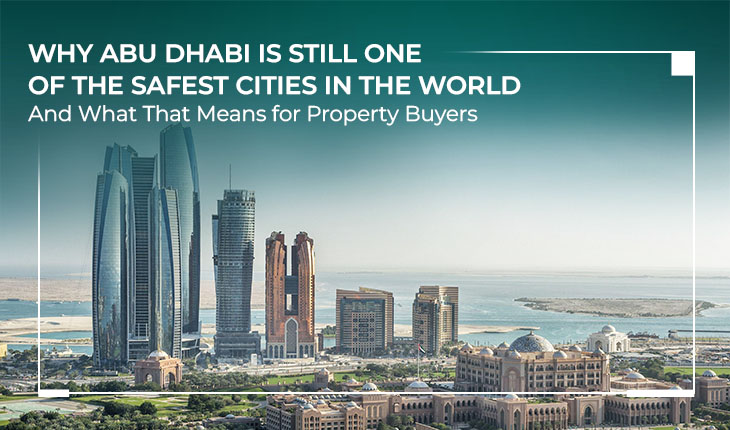
A decade of topping global safety rankings is no coincidence. Here’s the real story behind Abu Dhabi’s reputation — and why it continues to make the city a compelling place to call home.
If you’ve ever walked back to your apartment at midnight and felt completely at ease — no second-guessing, no scanning over your shoulder — then you already understand something that statistics alone can’t fully capture. That feeling of genuine safety is a lived experience. And in Abu Dhabi, it’s not just a feeling. It’s backed by data, infrastructure, and over a decade of consistent results.
For the tenth consecutive year, Abu Dhabi has been ranked the safest city in the world by Numbeo, the world’s largest cost-of-living and quality-of-life database, covering 400 cities across 150 countries. That’s not an outlier — that’s a pattern. And patterns tell you everything about a place.

A Record Built Over a Decade, Not Overnight. Ten years at the top doesn’t happen by accident.
It would be easy to write off these numbers as government branding. But when you dig into why Abu Dhabi consistently ranks at the top, the reasons are tangible and structural.
The Abu Dhabi Police Force operates one of the most technologically advanced law enforcement systems in the world. Predictive analytics, smart surveillance networks, and AI-driven response tools aren’t pilot programs here — they’re operational infrastructure. The result is a crime rate that remains exceptionally low, with violent incidents and theft classified as rare rather than routine.
Beyond technology, there’s culture. Abu Dhabi enforces a zero-tolerance approach to crime, and that philosophy runs deep — from traffic regulations to public conduct to commercial law. Residents and visitors consistently report feeling safe not just in hotels and malls, but in residential neighborhoods at all hours. The city ranks first in the index for walking alone at night and during the day — two of the most meaningful real-world measures of urban safety.
Community policing also plays a quieter but important role. Abu Dhabi’s police invest heavily in building genuine trust with residents rather than simply maintainin g visibility. That two-way relationship between law enforcement and the community creates a social environment where people look out for each other — something no camera system can fully replicate.
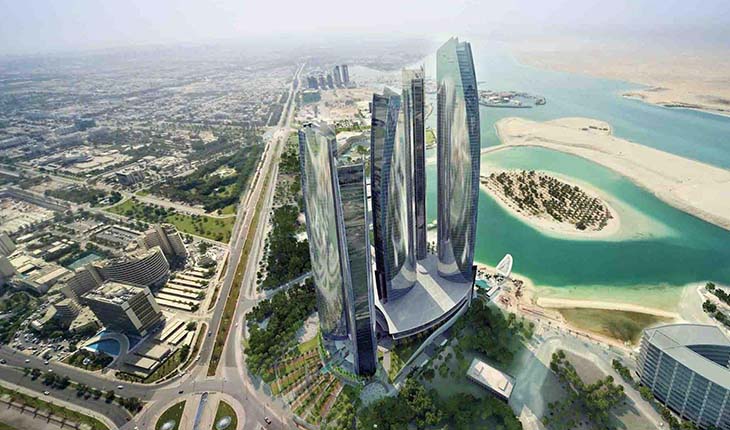
Not Just a City — A National Commitment “Six of the world’s ten safest cities are in the UAE”.
Abu Dhabi’s safety record doesn’t exist in isolation. It reflects a country-wide philosophy. Six of the world’s ten safest cities are in the UAE — a reflection not just of Abu Dhabi, but of a nationwide commitment to law, order, and livability. The UAE itself scored 85.2 on the Global Safety Index, ranking it the safest country in the world. When an entire nation builds its identity around security and stability, the cities within it benefit deeply.
Let’s Talk About the Regional Headlines (Honesty matters) — especially when you’re making a life decision.
It would be dishonest to write about safety in Abu Dhabi in 2026 without acknowledging the regional tensions that have drawn international attention. In March 2026, the U.S. State Department issued a Level 3 travel advisory for the UAE, and the American Embassy temporarily suspended routine consular services. These are real developments, and anyone considering a move or a purchase deserves a clear-eyed view.
Here’s the distinction that matters: there is a difference between a city’s internal security — its crime rates, day-to-day safety, and quality of life — and the broader geopolitical environment of the region in which it sits. Abu Dhabi’s internal security infrastructure remains robust. There are no known dangerous zones within the city, and residential and tourist areas continue to operate normally. The current elevated advisory is a precautionary response to regional dynamics, not an indication that Abu Dhabi has become unsafe to live in or visit.
For long-term residents and property investors, the more relevant question is: has anything fundamental changed about what makes Abu Dhabi a great place to live? The answer, based on every available metric, is no. The rule of law, the quality of public services, the security infrastructure, and the city’Why Safety Is Also a Smart Investment. When people feel secure, they put down roots
Safety isn’t just a lifestyle factor — it’s a financial one. Properties in safe, stable cities hold their value better, attract reliable tenants, and maintain desirability across market cycles. It’s no coincidence that Abu Dhabi’s real estate market has continued to perform strongly: demand from international buyers and long-term expats is closely tied to the perception — and reality — of the city as somewhere they genuinely want to raise families and build lives.
When a city tops global safety ranking for a decade straight, it signals something to investors: institutional trust, stable governance, and a long-term commitment to quality of life. Those are precisely the conditions under which property markets thrive.
At Gravity Real Estate, we work with buyers who care about more than floor plans and price per square foot. They want to understand the city they’re investing in — its neighborhoods, its lifestyle, its trajectory. And when that conversation comes up, safety in Abu Dhabi isn’t a talking point we need to sell. It’s a fact we get to share.
Abu Dhabi didn’t earn its reputation by chance — and it won’t lose it to headlines.
Abu Dhabi is not a city that stumbled into being safe. It built that reputation intentionally, through technology, governance, and a genuine commitment to quality of life for the people who live here. That foundation remains solid. Regional headlines will come and go — but a decade of number-one rankings in the world’s most comprehensive safety indices reflects something that doesn’t unravel overnight.
If you’re considering making Abu Dhabi your home — or adding to your investment portfolio here — you’re looking at a city that takes the welfare of its residents seriously. And in a world where that’s increasingly rare, that matters more than ever.