Abu Dhabi’s property markets have continuously been defined by their resilience. The fundamentals of Abu Dhabi’s real estate market are still structurally solid in the face of global geopolitical disturbances in early 2026, allowing value-conscious investors an opportunity to enter the short-term uncertainty in the area. The first step to understanding the investment process is to have a basic understanding of the real estate market cycle.
This is what you should know right now.
The Current State of Abu Dhabi’s Real Estate Market
The first quarter of 2026 has not been free of market disruption. Tensions between Middle Eastern countries have led to overall apprehension in the Middle East region, causing a ripple effect on Abu Dhabi’s real estate industry. Data from transaction activity has recorded that the volume of transactions for the UAE dropped by as much as 51% from February to March 2026 (month-over-month) and approximately 31% since this time last year (year-over-year). The decrease in transaction volume over the past month (from February to March) provides recognizable evidence of a pause in an overall upward trend in terms of investor confidence in the short term.
However, a pause does not mean that there will be little activity or further investment. Even with many investors hesitant to make future purchases, deal activity continues to occur within each of Abu Dhabi’s major residential property markets, and institutional-grade real estate transactions continue to see limited movement influenced by national news cycles. The dichotomy between external noise making headlines and the actual underlying market is evidence of a mature and well-organized real estate market—this is one of the defining characteristics that distinguishes Abu Dhabi from many of the newly developed markets in the region.
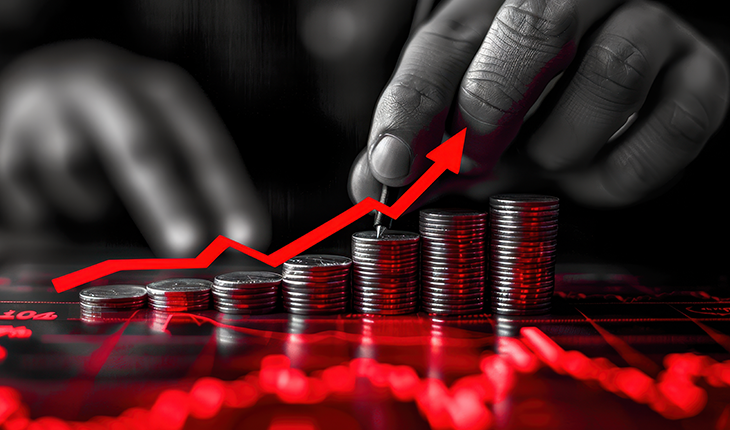
Price Correction or Market Recession? Understanding the Difference
The key question for both investors and analysts within the real estate sector at the moment is, will there be a correction to Abu Dhabi’s property prices? If so, how substantial will the correction be?
International institutions, such as S&P Global, have cited the potential for price softening to take place on a moderate level in some sectors. The segments of the market that are likely to experience a price softening include those sectors where an adequate supply of properties is greater, or has grown greater than the needed demand, or where speculation has taken place involving an abundance of properties.
Transaction prices have declined by as much as 4% or 5% in select geographic areas throughout other Gulf countries. However, these declines do not represent a recession for the total real estate market; there is an important difference between a price correction and a real estate market recession, and this difference is extremely important to real estate investors.
A price correction is a normal, and usually healthy, adjustment to the market that follows a lengthy period of elevated increase in price of a property. Typically, these adjustments happen in segments in which the supply of a property is greater than the level of demand for the property, or in segments where speculative buying of a property occurred.
On the other hand, a real estate market recession occurs when the total economy of an area experiences a prolonged period of contraction and declining levels of demand, while the total price of a property within the geographic area has reduced significantly over a prolonged period of time.
There are a number of reliable measures that show there will be limited price corrections taking place throughout the Abu Dhabi real estate market. Some of these variables are Abu Dhabi’s diversified economy, its large percentage of allocated state funds and expenditures for its citizens, and an active regulatory environment that helps to support long-term real estate investment.

Short-Term vs. Long-Term Impact: What Investors Should Expect
Short-Term Outlook
In the near term, the Abu Dhabi property market is experiencing a predictable “wait and see” phase. Some buyers and investors have temporarily stepped back, deterred by geopolitical news flow and regional uncertainty. Transaction volumes in March 2026 reflect this caution. A portion of the buyer pool has shifted to a holding position, preferring to monitor developments before committing capital.
However, demand has not disappeared. A segment of buyers — typically better informed and more strategically minded — is actively looking for opportunities created by reduced competition, softer negotiating conditions, and more realistic asking prices in the mid-market segment.
Long-Term Outlook
The long-term investment case for Abu Dhabi real estate remains compelling and well-supported by structural fundamentals:
- Economic diversification beyond oil, with growing sectors in finance, tourism, technology, and logistics
- Large-scale infrastructure investment as part of Abu Dhabi’s long-term urban development vision
- Genuine residential demand driven by population growth and sustained professional migration
- A clear, investor-friendly policy framework designed to attract and retain foreign capital
Perhaps most telling is investor behavior itself: studies and market surveys consistently show that Abu Dhabi property investors hold assets for an average of 7 to 10 years. This long holding period is a powerful indicator of confidence in the market’s long-term value trajectory and naturally stabilizes prices even during short-term volatility.

Investment Opportunities in the Current Market
Investment in the current financial market has created tremendous opportunities for many different kinds of investors. Here at Gravity Real Estate, we see three significant opportunities within the current financial environment.
1. Negotiating Leverage
Due to current uncertainty and some sellers being more willing to negotiate, today’s buyers have more negotiating leverage than they did just 12 months ago. As there has been a decrease in both volume and competition in Abu Dhabi’s Real Estate market over the past 2 years, the negotiating landscape within Real Estate has changed significantly from what it was just 12 months ago.
2. Mid-Market Deal
Due to the economic downturn, Investors are now focusing on the Mid-Market Residential Place. This segment of the market is often forgotten about during economic prosperity, but is now producing some of the best pricing since the downturn began over the past 2 years. If you are an Investor looking for good rental income on your investment while at the same time looking for capital appreciation, the Mid-Market Residential is a segment you need to be looking at.
3. Investing in Premium Locations for Capital Appreciation
Abu Dhabi’s long-established residential neighborhoods currently maintain their value and will continue to be in demand going forward.
Many institutions and High Net Worth Individuals (HNWIs) are already showing a willingness to invest in:
- Well-built family residential properties
- Established neighborhoods
- Waterfront properties
- Properties that create a lifestyle
As a result, these properties are also some of the best properties to consider for capital appreciation. The values of these types of properties will continue to remain attractive to both HNWIs and institutions.
4. Rental Market Strength
Even in uncertain market conditions, rental demand in Abu Dhabi is expected to remain robust. Continued inflows of professional expatriates across sectors, including finance, healthcare, education, and government services, sustain occupancy rates and rental income — making buy-to-let investments a particularly attractive proposition for those seeking yield stability over capital speculation.

Why Abu Dhabi Remains One of the Gulf’s Most Resilient Property Markets
It is worth stepping back to appreciate what makes Abu Dhabi’s real estate market structurally different from many of its regional peers.
The emirate benefits from a sovereign wealth foundation that actively supports economic stability. Its regulatory framework for real estate — encompassing foreign ownership zones, long-term visa programs, and transparent registration systems — has been progressively refined to build investor confidence. Urban master planning is sophisticated and long-horizon, meaning that infrastructure quality, green space, and community design tend to appreciate over time rather than deteriorate.
These are not temporary advantages. They are structural characteristics that underpin the market’s ability to absorb shocks and recover, as it has done repeatedly throughout the past two decades.
Final Word from Gravity Real Estate
The Abu Dhabi real estate market in March 2026 is not a market in crisis — it is a market in transition. Short-term caution has created a medium-term opportunity, and the investors who move with clarity and the right guidance during this period are likely to look back on this window as a defining moment in their property portfolio.
At Gravity Real Estate, we specialize in helping clients navigate exactly these kinds of market moments — with data-driven insight, deep local knowledge, and a commitment to finding the right property at the right price.
Ready to explore Abu Dhabi real estate investment opportunities? Contact our team today and let us help you move with confidence.